
Introduction
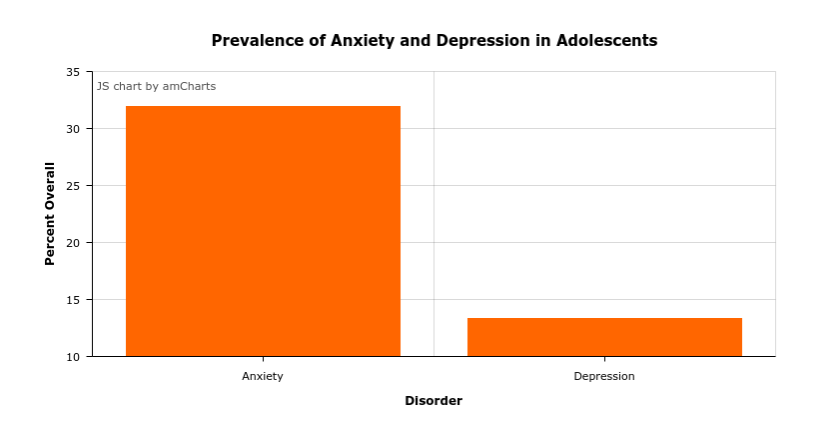
Anxiety and depression may occur at the same time, meaning they are co-morbid. One study showed that half of people suffering from one of these disorders also has the other. They can be caused by different factors but may share similar symptoms. Anxiety and depression are especially prevalent among adolescents. In 2017, data showed that around 3.2 million adolescents aged 12 to 17 suffered at least one depressive episode. Data from National Co-morbidity Survey Adolescent Supplement showed that 31.9% of adolescents suffered from an anxiety disorder.
Symptoms
Anxiety
- excessive worry
- restlessness
- long-lasting fatigue
- difficulty concentrating
- irritability
- difficulty sleeping
- muscle tension or aches
Depression
- long-lasting sadness, emptiness, or hopelessness
- memory loss
- decreased energy and fatigue
- difficulty concentrating
- irritability
- difficulty sleeping
- weight fluctuations
- suicidal thoughts
Causes
Anxiety
Although the causes are not concrete, anxiety disorders are widely believed to be caused by the following factors:
- Genetics: disorders may be passed down from generation to generation
- Environment: a person’s environment can affect their mental state, and traumatic events can trigger anxiety disorders
Depression
Depression can have many causes. It is widely believed to be caused by some or more of the following factors:
- Genetics: disorders may be passed down from generation to generation
- Environment: a person’s environment can affect their mental state, and traumatic events can trigger depression
- Chemical Imbalances: changes in the chemicals in the brain, such as serotonin levels, can affect a person’s mental state
- Drug Abuse: drug and alcohol abuse often coincides with depression
Treatments
Anxiety
Different anxiety disorders may require different treatment plans. The most common treatments for anxiety are:
- Therapy: psychotherapy such as Cognitive Behavioral Therapy (CBT) can treat anxiety disorders
- Medication: doctor-prescribed medications may include antidepressents
- Other Methods: alternative methods of stress relief may help alleviate symptoms of anxiety
Depression
Depression often requires a specific treatment plan to the affected person. Some common treatments are:
- Therapy: psychotherapy such as Cognitive Behavioral Therapy (CBT) can treat depression
- Medication: doctor-prescribed medications may include antidepressents
- Exercise: physical activity can help prevent symptoms of depression
- Other Methods: alternative methods of treatment may include light therapy, meditation, faith-healing, and more
 Mind Over Matter